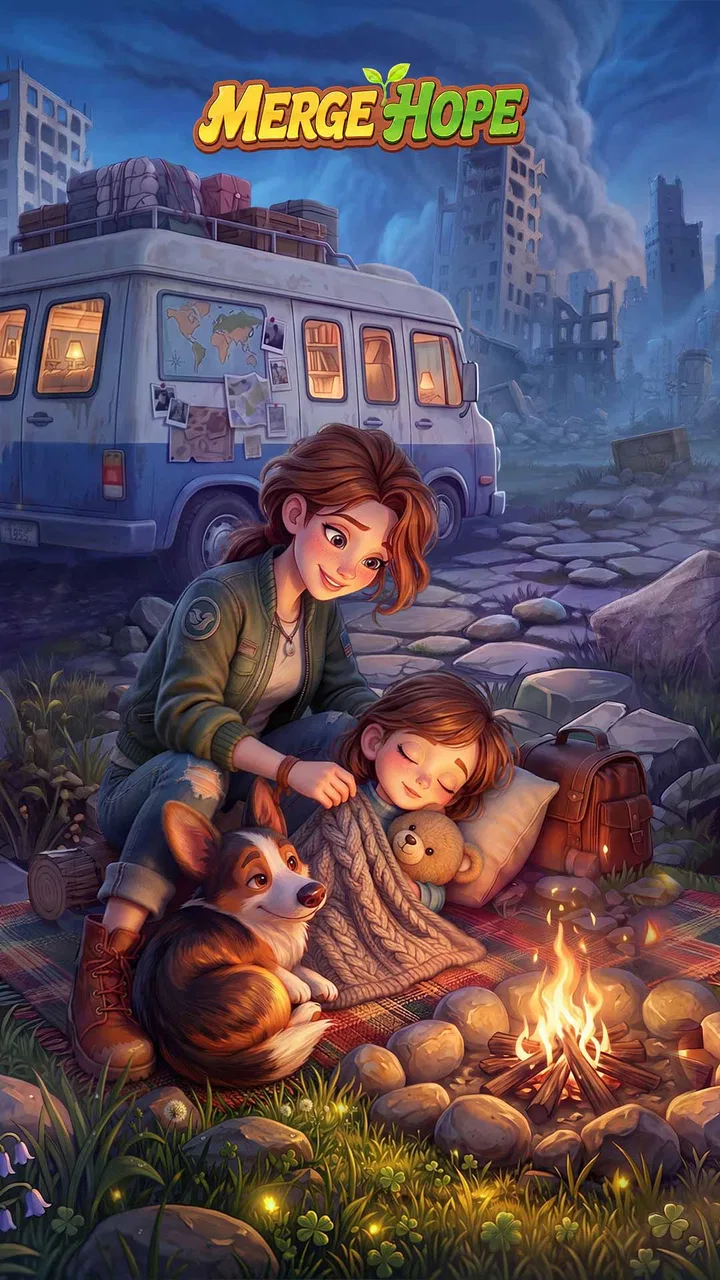
Merge Hope: Build & Story
- 3.8
- Rating
- 50.00K
- Installs
- Free
- Price

 Analysis by App-foxy
I approached Merge Hope: Build & Story as a decision rather than a quick download recommendation. Its central idea is easy to understand: combine matching items, use the results to rebuild a home, and let that restoration provide the sense of progress. That puts it in the relaxed puzzle-and-renovation space, where the best games are not necessarily the ones with the most complicated rules, but the ones that make every short session feel worthwhile.
My first impression was that the game is aimed at people who enjoy visible improvement. You are not solving isolated boards and then moving on forever. The appeal comes from seeing a damaged setting gradually become more welcoming while your merging decisions keep the activity moving. The store summary, “Rebuild Our Home,” captures that broad direction, while “Merge Hope” points to the emotional layer behind the puzzle loop.
It is free to start, carries an Everyone age rating, and comes from 37GAMES-GLOBAL-ENTERTAIN. The current release is version 1.0.0.8, and it runs on Android 7.0 or later. Those details make it accessible to a wide range of phones, but accessibility alone is not enough. The important question is whether this particular blend of merging, rebuilding, and story suits the way you like to play.
You May Also Like

 Pandora - Music & Podcasts
Pandora’s Music Is Easy to Start, but Harder to Recover
Pandora’s strength is its low-effort path from a seed to a station. Its weak spot is how much confidence it asks you to place in connection, setup, and quiet recovery.

 8 Ball Pool
 Is Built on Rivalries, Rematches, and Routine
A close look at the rivalries, rematches, shared routines, and unanswered safety questions that turn a quick pool match into a persistent mobile community.

 Samsung Music
’s Quiet Strength Is Playing What You Already Own
Its reach comes less from spectacle than from dependable access to a personal library. That simplicity is both the app’s strongest retention engine and its ceiling.

 AccuWeather: Weather Radar
AccuWeather Review: A Quick, Clear Forecast for Everyday Decisions
For everyday plans, the best forecast is the one you can understand quickly. AccuWeather makes rain timing, radar, and local conditions easy to act on, with a few trade-offs.

 Hill Climb Racing
Why Hill Climb Racing Still Turns Crashes Into One More Run
A tiny car, a bumpy hill and one more upgrade: Hill Climb Racing keeps resurfacing because its simple chaos makes every near-miss feel personal.

 AliExpress - Shopping App
AliExpress Makes Global Shopping Feel Personal, but Shoppers Bear the Risk
AliExpress turns a global marketplace into a pocket-sized discovery engine. Its reach is useful, its shopping loop compelling, and its trade-offs easy to miss.
More From Our News Desk
View All News


What I would consider before choosing it
I would use this section to weigh the game’s recurring routine against what you personally want from a puzzle: a gentle project to revisit, or a steady stream of fresh challenges. I’d also think about whether optional purchases fit comfortably within my approach to free games, before deciding whether its relaxed pace is a good match.
The puzzle loop matters more than the decoration
When I judge a merge game, I look beyond the attractive restoration theme. The real test is what happens after the first few minutes: do the decisions stay interesting, does the board remain readable, and does the rebuilding give me a reason to continue? In this case, the home-repair framing gives the usual matching activity a clear purpose. Combining objects is not presented as an abstract score chase; it is tied to making a place feel usable again.
That structure is especially helpful if you prefer gentle goals over strict competition. I can open the game with a small objective in mind, make a few combinations, and feel that the session has moved something forward. It is a better fit for players who enjoy gradual completion than for someone looking for timed pressure, deep tactical battles, or a puzzle that demands complete concentration from the first move.
Ask how much story you actually want
The story element is part of the decision, but I would not choose this solely because the title suggests an emotional narrative. The rebuilding theme supports the gameplay, yet the main attraction remains the merge process and the steady transformation of the home. If you enjoy light narrative framing around a puzzle, that combination should feel natural. If you want a long, dialogue-heavy adventure with complex characters, a dedicated story game would probably serve you better.
This distinction also helps set expectations about replay value. A renovation-focused merge game usually gets much of its satisfaction from progress, unlocking, and completion. Once a particular area feels finished, the motivation may depend more on your enjoyment of the next set of tasks than on mastering a traditional puzzle system. I would treat it as a relaxing progression game, not as a replacement for a serious logic-puzzle collection.
Think about your session length
For me, the strongest use case is a series of short visits. It works well when I have a few minutes while waiting for an appointment, taking a break, or winding down before bed. The home-rebuilding objective gives those brief sessions a clear endpoint: I can make progress without needing to commit to a long uninterrupted play period.
That convenience has a trade-off. A game built around repeated merging can become routine if you want constant novelty. The question is not whether the basic action is understandable; it is whether you like repeating a familiar action while watching a larger project take shape. Players who enjoy sorting, combining, and slowly improving a space will likely find that rhythm comfortable. Players who need a new mechanic every few minutes may feel the loop settle too quickly.
Consider the spending model before you get invested
The game is free, but optional in-app purchases range from $0.99 to $99.99 per item. That wide range is worth noticing before you become attached to a particular pace of progress. I would begin with a personal rule: play without buying anything for several sessions, then decide whether the normal rhythm feels satisfying on its own.
This is not just a budgeting tip. It is also a way to understand the game fairly. If you are comfortable with gradual progress, the free entry point may be enough. If you dislike any design that places paid options near a relaxing puzzle loop, you may prefer a premium puzzle game instead, even if it offers fewer renovation visuals. The right choice depends on whether optional spending feels like convenience to you or an interruption to the experience.
Read the audience signals in context
The game has a 3.8 average from around 178 ratings, with roughly 56 written reviews and over 50,000 installs. I would read that as a modest early audience rather than a definitive verdict. It has enough activity to suggest that people are trying it, but not enough public feedback for me to treat the rating as a final measure of long-term quality.
For a prospective player, the practical lesson is simple: use the game’s core promise as the deciding factor. If rebuilding a home through merging sounds appealing, the current reception should not automatically put you off. If you are already uncertain about the genre, the rating does not provide a strong reason to take the chance over a better-known alternative.
Small habits that make the board easier to manage
One useful habit with this type of game is to avoid combining everything immediately. I prefer to keep a little visual order, group similar pieces, and wait before making a merge that could fill an awkward space. That approach is less exciting than tapping every available combination, but it helps preserve room for the next objective and reduces the feeling that the board is working against me.
I also recommend treating the home as a planning aid, not just a reward screen. When the game asks me to focus on rebuilding, I use that larger goal to decide which combinations deserve attention first. This prevents aimless merging and makes the session feel more deliberate. It is a small change, but it turns the loop from “tap whatever is available” into “prepare the board for the improvement I want next.”
Where Merge Hope earns its place
For me, the deciding factor is whether rebuilding the home gives the familiar merging loop enough purpose to bring me back. This section looks at how that goal can fit into ordinary short breaks, and why a little patience with the board may make each visit feel more satisfying than simply combining every available piece.
The restoration theme gives ordinary merging a reason
The clearest strength is the connection between puzzle actions and visual rebuilding. Many merge games can feel like an endless inventory exercise: combine one object, wait for another, and repeat. Here, the home provides a concrete destination for that effort. Even when the individual merge is simple, the larger restoration goal gives it context.
I find that especially effective for casual players who do not care about leaderboards. The satisfaction is personal rather than competitive. You are improving your own space, and the reward is the sense that a neglected place is becoming complete. That makes the game easier to recommend to someone who wants a calm activity with a little structure instead of a demanding challenge.
It is approachable without requiring puzzle expertise
The concept is immediately readable. Matching and combining objects is familiar enough that new players can understand the basic direction without studying a complicated rulebook. The rebuilding layer then gives the activity a sequence of meaningful targets. I would consider that a strength for families and casual players, particularly because the Everyone rating signals an intentionally broad audience.
That broad accessibility does not mean every age group will enjoy it equally. Younger players may like the simple goal of improving a home, while adults may appreciate the low-pressure routine. On the other hand, experienced puzzle fans may find the early learning curve too gentle. This is a game I would recommend for comfort and clarity, not for demanding mental resistance.
It fits an everyday break better than a long gaming block
Imagine having ten minutes before leaving for work. A competitive game might punish you for stopping, and a story adventure might leave you halfway through a scene. A merge-and-rebuild game is easier to fit around that kind of interruption. I can make a few decisions, improve the current project, and put the phone away without feeling that I abandoned a complicated mission.
The same quality makes it useful during low-energy moments. After a tiring day, I may want something more engaging than scrolling but less demanding than a strategy game. The home-restoration premise gives me a gentle objective, while the puzzle actions provide enough interaction to keep the session from feeling passive.
The current release is easy to approach technically
Support for Android 7.0 or later means the game is not restricted to only recent Android devices. That matters if you are using an older phone and want a modern casual puzzle without immediately needing an upgrade. I would still judge performance on the individual device, but the stated minimum makes the entry barrier relatively low.
The version number, 1.0.0.8, also places the game in an early stage of its release life. I see that as both an opportunity and a caution. Newer games can feel fresh and may develop over time, but they may also have rougher balance or fewer layers than established alternatives. I would install it with the expectation of enjoying what is present now, rather than assuming it already has the depth of a long-running franchise.
There is room for a more thoughtful play style
A less obvious advantage is that the game rewards patience in a way the store summary cannot explain. The most satisfying sessions are not necessarily the fastest ones. Keeping the board organized, delaying a tempting combination, and working toward a specific home improvement can make the simple mechanics feel more strategic.
That does not turn it into a complex planning game, and I would not oversell the depth. It does, however, give careful players a way to get more from the same basic actions. If you enjoy optimizing a small space and making decisions with limited room, you may appreciate this layer more than someone who plays only for quick visual rewards.
Where the experience may lose momentum
The same repetition that makes the game relaxing can also become its main weakness. If the available actions begin to feel predictable, the home theme may not be enough to keep you engaged. I would be particularly cautious if you have already grown tired of merge games that depend on the promise of the next renovation rather than frequent changes in how you play.
There is also a possible emotional mismatch. “Hope” and rebuilding suggest a warm, meaningful journey, but players should not assume that the theme alone will deliver a deep dramatic experience. The game’s appeal is strongest when the story supports the puzzle loop. If you want a narrative that remains compelling even without its mechanics, choose a story-first title instead.
Who should choose another kind of puzzle game
I would skip this one if your ideal puzzle means crossword solving, number logic, physics challenges, or fast pattern recognition. Those categories offer a more direct test of skill. Merge Hope: Build & Story is better understood as a progression puzzle, where organization and patience matter more than finding one brilliant solution.
I would also look elsewhere if you want a clearly premium experience with no purchase prompts. The free model makes it easy to try, but the range of optional purchases may not suit people who prefer to pay once and receive a complete, uninterrupted game. In that situation, a paid puzzle title is likely to feel cleaner, even if it lacks the home makeover structure that makes this game distinctive.
How switching from another merge game may feel
If you already play a different merge title, the cost of switching is mostly habit. You will need to learn how this game organizes its rebuilding goals and decide whether its home-focused rewards motivate you more than your current game’s collection, characters, or events. The basic comfort of merging transfers easily, so the adjustment should not be difficult, but the reason to stay will depend on the atmosphere and progression.
I would not uninstall an established favorite immediately. Instead, I would keep both for a short trial and compare three things: which one makes short sessions feel complete, which one leaves the board easier to understand, and which one makes you want to return without relying on a purchase. That comparison is more revealing than judging screenshots or summaries, because it tests the exact routine you will use every day.
My recommendation for different kinds of players
For a casual Android player who likes decorating, gradual goals, and simple puzzle actions, I think this is worth trying. The free download removes the initial financial commitment, the age rating keeps the concept broadly accessible, and the rebuilding theme gives the merging a clear emotional direction. I would start slowly, keep the board tidy, and decide on spending only after seeing whether the natural pace works for me.
For a dedicated puzzle enthusiast, my recommendation is more qualified. Try it if you enjoy the management side of arranging objects and the visual satisfaction of restoring a home. Do not choose it expecting dense logic, competitive pressure, or a radically changing ruleset. Another puzzle category will probably be more rewarding if your main goal is intellectual challenge rather than steady progression.
For families, it may be a friendly option for shared casual play, but I would still encourage an adult to explain the purchase model before handing over the device. The Everyone rating describes the audience level, not a promise that every player will prefer the same pace or spending choices. Setting that expectation early keeps the relaxing part of the game from turning into an argument about progress.
After weighing those trade-offs, I see Merge Hope: Build & Story as a pleasant, focused choice rather than an essential puzzle download. Its best quality is the way it turns familiar combining actions into visible home restoration. Its main risk is that the loop may feel too repetitive for players who need constant novelty, while the optional purchase range may discourage anyone seeking a fully premium experience.
My clear recommendation is to try it when you want a calm rebuilding game for short sessions, but skip it if you are searching for deep logic puzzles or a one-time-purchase alternative. The decision becomes straightforward once you identify what you want from the genre: a gentle sense of improvement, or a tougher and more varied puzzle challenge. For the first need, this game has a coherent reason to exist and a welcoming starting point. For the second, your time will be better spent elsewhere.
FAQs for Merge Hope: Build & Story
01What is Merge Hope: Build & Story about?
Merge Hope: Build & Story is a casual puzzle and town-building game that combines item merging with a narrative-driven restoration adventure. You combine matching objects to create upgraded materials, complete tasks, rebuild damaged locations, and gradually improve the surrounding community. The game is designed for relaxed, progressive play rather than fast-paced action, with story scenes and construction projects providing goals beyond simply solving merge boards.
02How does the merging gameplay work?
The main gameplay involves placing identical items together to merge them into more advanced objects. These upgraded materials can be used to fulfill orders, complete restoration objectives, and unlock additional areas or story content. The board can become crowded, so planning your combinations is important. It is usually better to create useful chains and save valuable items than to merge randomly and run out of space.
03Can Merge Hope: Build & Story be played offline?
Some basic gameplay may be available without a continuous internet connection, but offline access can vary depending on the version, device, and feature being used. Story updates, advertisements, cloud saving, purchases, event content, or account-related functions may require an internet connection. If you plan to play while traveling, it is best to open the game online first and check which features remain available after disconnecting.
04Is Merge Hope: Build & Story free to download and play?
The game is generally free to download, but it may include optional in-app purchases and advertising. These can provide extra energy, boosters, currency, or other conveniences that speed up progress. You can normally advance without paying, although energy limits and waiting periods may make progression slower. Parents should also review purchase settings if children use the device, since optional transactions may be available inside the game.
05Does the game require a powerful phone or tablet?
Merge Hope: Build & Story is primarily a casual 2D-style mobile game, so it should run comfortably on many modern Android and iOS devices. However, performance can depend on available storage, memory, operating-system compatibility, and how many other applications are running. Older devices may experience longer loading times, reduced responsiveness, or battery drain. Before downloading, check the store listing for the current system requirements and available storage.
Pros
- Relaxing merge gameplay that is easy to learn and play casually.
- Story-driven progression gives purpose to completing each merge task.
- Colorful visuals and charming characters make the world appealing.
- Playable in short sessions
- making it suitable for mobile gaming.
- Frequent objectives help keep progress feeling structured and rewarding.
Cons
- Energy limits may interrupt longer play sessions.
- Some upgrades and progress can require considerable grinding.
- The merge mechanics may feel repetitive over time.
- Optional purchases can speed up progress and resource collection.
- Loading times may increase on older or less powerful devices.

Merge Hope: Build & Story
Gallery